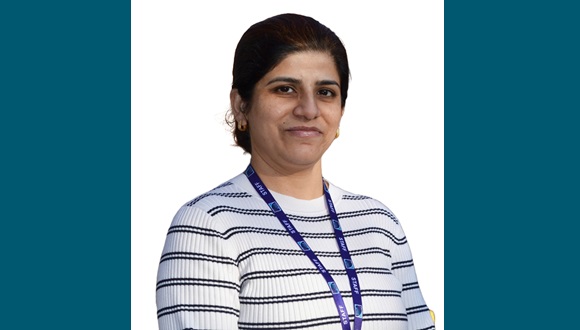
Dr Deepshikha, Queen Mary University of London, shares how EduMark AI is transforming assessment by improving feedback quality, consistency and educator workload efficiency.
Rethinking assessment in higher education
If you ask most educators what takes up the largest share of their time outside teaching, the answer is almost always assessment. At Queen Mary University of London (QMUL), staff estimate that marking and feedback for just one module can demand over 60 hours per academic. Multiply that across courses and large cohorts, and you begin to see why feedback often feels delayed, inconsistent and unsustainable.
Our aim was precise: explore how AI could deliver timely, consistent and personalised feedback while preserving academic integrity and educator oversight.
That question led to the creation of EduMark AI, an initiative funded by the Drapers’ Fund for Innovation in Teaching and Learning. It was recognised internationally through OpenAI’s Professors Teaching with AI 2025 series.
From idea to pilot: building EduMark AI
EduMark AI was designed not to replace academic judgment but to enhance educational quality. Our journey began with a rigorous evaluation. We compared four AI systems: ChatGPT, Google Gemini, Graide and Timely Grader testing them against anonymised student assignments from our courses. This wasn’t about finding the “best” AI, but about systematically identifying which tool worked for our specific context and needs.
Using large language models such as ChatGPT and Google Gemini, we developed a framework to:
- align AI outputs with educator rubrics
- provide structured, rubric-based feedback
- deliver personalised, actionable guidance for students
The system underwent ethical approval at QMUL and was tested on over 200 anonymised student submissions, ranging from lab reports to essays.
The pilot revealed striking benefits:
- 50–60% reduction in marking time, freeing educators to focus on teaching innovation and mentoring.
- Consistent grading patterns, reducing variability across markers.
- Student approval: learners described the AI-generated feedback as “extremely clear” and, in some cases,more usefulthan traditional comments.
What difference did it make?
The real impact was seen in students’ learning journeys. Instead of waiting weeks, students received immediate, personalised feedback, helping them reflect while their work was still fresh. They valued the specific guidance on what went well and what needed improvement.
For staff, EduMark AI provided a safety net for consistency and reliability. Even when the educator’s workload was high, the AI maintained standards and ensured the quality of feedback, while academics retained final control over grades.
This hybrid model – AI plus educator review has created an approach that is both efficient and ethical, combining the speed of automation with the nuance of human judgment.
Lessons learned along the way
Three key insights emerged from our journey:
- Prompt design is everything– the technology is less important than the way you train it to mirror educational standards.
- Educator oversight is essential– AI can miss subtle reasoning or originality. A review stage protects academic integrity.
- Students want clarity, not shortcuts– far from rejecting AI, learners welcomed feedback that was structured, specific and actionable.
Looking ahead
Our work has garnered national recognition, including selection by OpenAI Academy for their international “Professors Teaching with AI” series. But the real validation comes from students who receive better feedback and educators who can focus on what they do best.
EduMark AI is now shaping a vision of scalable, ethical AI in assessment. Our next steps include:
- pilots across new disciplines beyond STEM
- integration with institutional platforms like QMPlus and Turnitin
- developing best-practice guidelines for AI in assessment.
This work aligns with QMUL’s Strategy 2030 to embed AI literacy and supports Advance HE’s mission of Education for the Future.
Take-home message
AI in education isn’t about replacing humans – it’s about freeing educators to focus on what really matters: mentoring, teaching and inspiring. With thoughtful design and ethical safeguards, AI can make assessments more consistent, provide more meaningful feedback, and enhance student learning effectiveness.
What challenges are you facing with assessment and feedback in your courses? How might AI enhance, not replace, assessment in your context? I’d love to hear how colleagues across the sector are experimenting with these tools.
Dr Deepshikha is a Teaching Fellow in the School of Engineering and Materials Science at Queen Mary University of London, with 15+ years of global teaching experience and an Advance HE Fellowship. Her research focuses on AI in education, pedagogical innovation, and sustainable learning technologies. She is the Principal Investigator for EduMark AI, recognised internationally through OpenAI’s Professors Teaching with AI series.