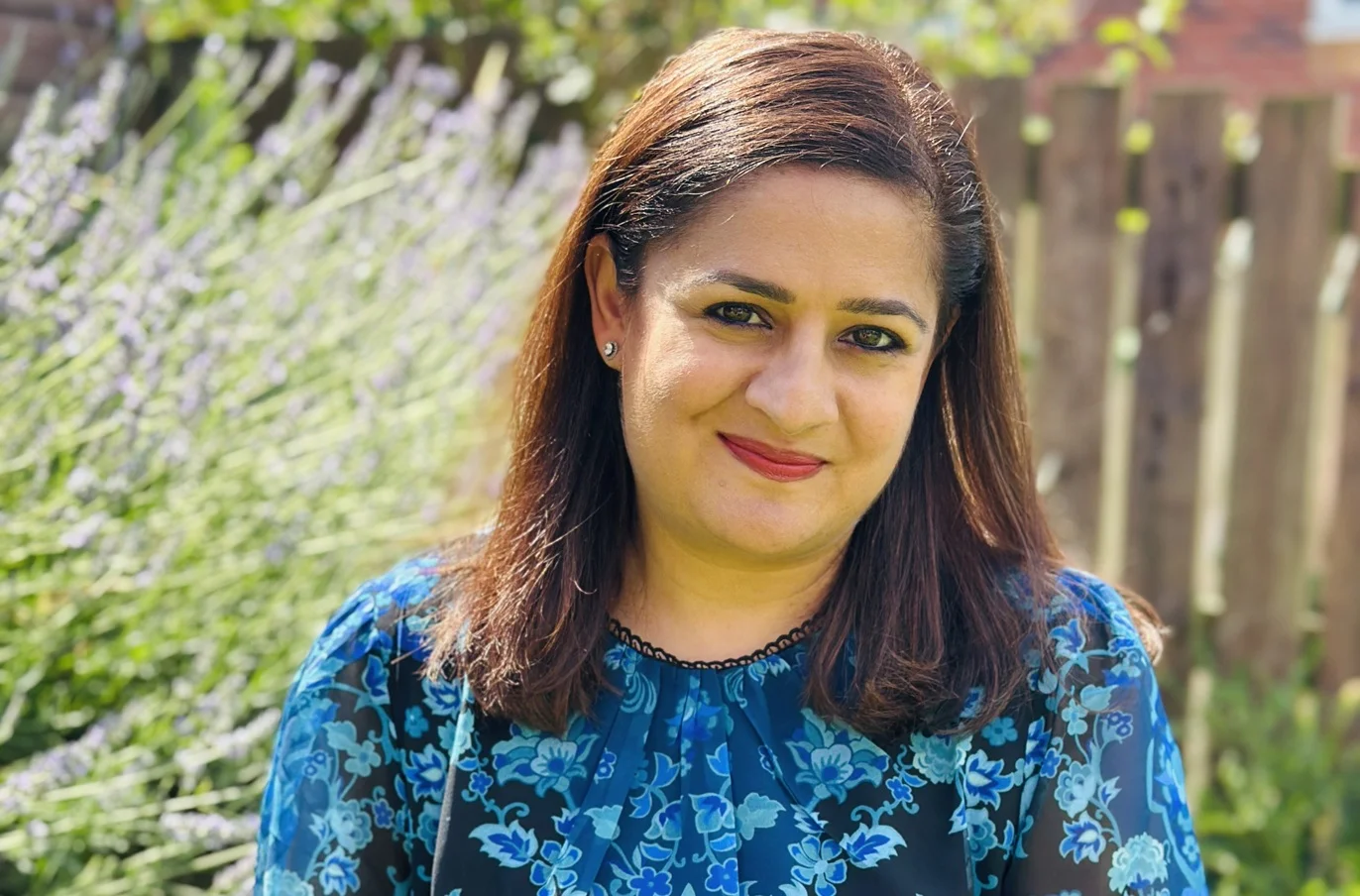
New National Teaching Fellow, Dr Saneeya Qureshi, Head of Researcher Development and Culture at University of Liverpool, reflects on researcher education, learner agency and why teaching excellence begins with empowering others.
Working across cultures, disciplines and the space between research and education taught me that our greatest responsibility as educators is not simply to share knowledge, but to create the capacity and confidence for others to recognise their own agency.
This has arisen from my own experiences of navigating unfamiliar systems, questioning whether I belonged, and discovering that someone else’s belief in my potential could change everything. After reading my first MA Education assignment, Professor Richard Rose – then-module leader and later my exemplary PhD Supervisor – told me I should consider doctorate study and that he would find the funding to make it possible. His belief in my potential changed the direction of my career and my life. That experience has strengthened my determination to create educational environments where others experience that same sense of possibility.
What the Fellowship means to me
For me, receiving a National Teaching Fellowship recognises the importance of researcher education as an essential part of higher education. Many of the learners I work with would not instinctively describe themselves as educators: they are postgraduate researchers, research staff, supervisors, mentors and professional colleagues. Yet every day they teach, guide, challenge and inspire others.
When researchers are supported to become confident educators, supervisors and mentors, they are better equipped to create research environments in which people feel valued, able to contribute and empowered to develop others.
The Fellowship therefore shines a light not only on my work, but also on a community whose educational contribution is often overlooked, despite shaping thousands of learners every year.
What teaching excellence looks like
Growing up and working across Africa, Asia and Europe taught me that there is rarely a single way of understanding learning. Different cultures ask different questions, value different forms of knowledge and approach education in different ways. Rather than seeing these differences as barriers, I have learned to see them as opportunities. My intercultural perspective shapes how I design learning environments enabling different experiences to be recognised as strengths, learner voices to be genuinely valued and included, and researchers to develop the confidence to influence, and not simply participate in higher education. For me, teaching excellence is ultimately measured by what remains after we have left the room: greater confidence, stronger professional identities, deeper curiosity and the courage to contribute.
At the University of Liverpool, since 2017, I have worked to embed researcher education within research culture itself, helping establish institution-wide frameworks that integrate professional development, learning and teaching, supervision and leadership. Beyond Liverpool, I work with colleagues across Europe and beyond to strengthen mentoring, supervision and researcher development. I contribute to national and international policy and practice through organisations such as the European Educational Research Association, the Faraday Institution, the British Academy and Vitae.
Being a lifelong learner
One of the greatest insights in preparing my National Teaching Fellowship claim was not just reflections on past achievements, but on how I want to evolve as an educator and leader. It reminded me that my expertise should never become certainty and that curiosity is one of my greatest professional assets.
Those reflections reinforced something I had never articulated before: that my commitment to learner agency is not simply a pedagogic principle – it is a personal ethic rooted in my own experiences of marginalisation. That is why I continue to invest in learning, scholarship, mentorship, practice-sharing and why I regularly turn to colleagues whose perspectives push my thinking beyond familiar frameworks.
If I could offer one piece of advice to prospective National Teaching Fellows, it would be this: build your work around a question that refuses to leave you. Mine has always been: how can I help learners to recognise their own agency to teach, lead and shape the future of higher education?
Looking ahead
Educational change is rarely immediate, particularly when working across traditional boundaries. Not everyone will understand or share your commitment to lifelong learning, generous collaboration or practice-sharing. Work that challenges established boundaries or established ways of recognising educational contributions may not always be immediately understood or supported. Stay true to your values anyway. Keep learning and sharing generously with those who are open to improving their professional practice. Sustained and consistent impact speaks volumes.
Looking ahead, I intend to continue advocating for the recognition that researcher education takes many different forms and is shaped by diverse experiences, identities and professional journeys, including those, such as research technical professionals, whose educational contributions are frequently embedded within research practice and therefore less visible within traditional definitions of teaching.
This recognition is essential if we are to create the richest and most inclusive learning experiences for people at every stage of their development. Research, education and professional practice should never exist in isolation. When they are connected through generosity, curiosity and shared purpose, we create learning cultures in which everyone has the opportunity not simply to succeed, but to help others succeed too.
Dr Saneeya Qureshi is Head of Researcher Development and Culture, University of Liverpool. Recognised for advancing learner agency through researcher education, Dr Qureshi creates inclusive opportunities that empower researchers and educators to develop confidence, voice and professional identity. Working across policy, pedagogy and research culture, she strengthens the people, practices and systems that shape learning, teaching and research supervision internationally.