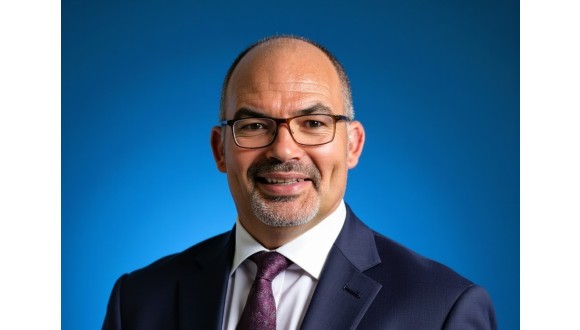
Professor Ian Pickup, Pro-Vice-Chancellor (Students) at The Open University, reflects on NSS evidence showing persistent gaps in disabled student satisfaction, and explains how the Disabled Student Commitment provides universities with a practical framework for addressing structural barriers and creating more equitable outcomes across the sector.
Since 2023, when the Office for Students first published National Student Survey (NSS) data by student characteristics, it’s been clear that disabled students are one of the groups least satisfied with their student experience. Whilst we can see improvements in scores across all questions for disabled students since 2023, these improvements seem less marked than those noted for non-disabled students. This disparity of experience has also recently been called out by the OfS’ Director for Fair Access and Participation, who suggests that :
“Thirty years on from the passage of the Disability Discrimination Act, and 15 years on from the Equality Act, it cannot be good enough that this gap in experience is widespread across the sector and so persistent across time.”
In 2025, disabled students are between 1.3 and 5.2 percentage points less satisfied than their non-disabled peers. The biggest negative differences are seen in relation to clarity of marking criteria (-4.4% pts), communication of changes to teaching (-4.4%pts) and freedom of expression (-5.2% pts). Disabled students are also markedly less satisfied with student voice (-3.1% pts), course organisation (-3.6 % pts) and fairness of marking criteria (-2.6 % pts). The difference in satisfaction is even greater and more pervasive for students with a mental health condition (making up 5 % of all students), a cognitive or learning disability (making up 6 % of students) or with multiple conditions (approximately 3% of all students had multiple or other disabilities).
The persistence of this ‘satisfaction gap’ should be important to universities. What it shows can be interpreted as both general and specific. In general, the data remind us that there is no such thing as a typical student. Our student bodies are wonderfully diverse and we need to be alive to the concerns and interests of different groups. The latest official data (for 2023/24) suggest that 22% of the domestic student body identify as being disabled, an increase in the percentage sharing this status from 18% in 2020/21. More specifically there are very particular things that seem to be going wrong for disabled students; if we go back to 2023, we can see an almost identical shape of dissatisfaction. Then there were also significant differences in the degree of disabled student satisfaction in: Assessment and Feedback; Organisation and Management; Learning Resources; and Student Voice.
An alternative way of evidencing the relative challenges for disabled students is the fact that they are far more likely to have cause to make complaint about their learning experience than non-disabled students. The annual report of the Office of the Independent Adjudicator states that 40% of all complainants in 2024 shared that they have a disability – up from 33% in 2023.
If universities want to reduce the satisfaction gap for disabled students, they need to focus on the specific concerns that disabled students have, given that generic student experience interventions are evidently not providing equality for the whole student body. Whilst the range of factors that impact on disabled student satisfaction is not well identified by the NSS, we can extend our understanding of disabled students’ living experiences by asking more specific questions – such as those seen in the Disabled Students UK Annual Disabled Students Survey. For instance, the ADSS shows that UK wide, only 38% of respondents state that all the adjustments that have been agreed for them are actually put in place – showing that implementation of support is a clear problem area for the sector.
This insight is crucial – it confirms that many barriers are not about access to support in principle, but about consistent and timely application in practice. Students are being let down not by the design of policies, but by failure to follow through in practice, especially at transition points or moments of high stress. When institutions attempt to improve disabled students’ experiences by tweaking processes without understanding the underlying emotional or identity-related barriers, change can also fall flat. It is important to recognise that not all friction is procedural, and students are telling us that many barriers are about perception, trust, cultural disconnection, or lack of sense of belonging.
In my own institution, The Open University, we have started to take a different approach – one that acknowledges different types of friction in processes, perceptions, and a combination of the two – and are using these lens to identify and respond to the layered challenges that students face. We have learned that trying to fix the system without understanding how it is felt and navigated by different students risks reinforcing exclusion – the polar opposite of what we want to achieve.
We cannot close the satisfaction gap for our large and diverse body of disabled students by treating them as edge cases. Instead, we recognise that designing the student and academic experience for those most affected by structural barriers has the potential to improve the experience for all students. This is the principle of targeted universalism; setting a universal goal, such as an inclusive and equitable student experience, and addressing the specific barriers faced by different student groups in order to get there. When we consider this approach, I am sure we can all think of examples of how we might use accessibility functionality in our day-to-day lives – I regularly use enlarged text and subtitles by way of example. The so-called ‘curb-cut effect’ reminds us that inclusive design from the outset creates positive impact for all.
This methodology does not just aim to close gaps, it aims to build a culture of belonging. That means shifting the focus from fixing students to fixing structures, using living experience insights to guide design, and actively recognising where trust has been eroded. We define belonging as both a structural and emotional condition, where all people are recognised, can participate, and have agency in shaping the systems that shape their lives.
In addition to embracing direct, meaningful and widespread involvement of students with disabilities in decision making processes, we have signed up to the Disabled Student Commitment. Like the wide range of HE providers who have also signed the commitment, we see this as supporting our approach to benchmarking policies and practice against a set of key principles. We are currently mapping provision and taking heed of student voice data to build a tailored action plan.
We see the Disabled Student Commitment as an enabler of our wider approach to enhancing the student experience, helping us to set universal goals while addressing specific, measurable barriers that affect disabled students disproportionately across their learning journeys. Whilst there may well be relatively simple process fixes, we caution against a simplistic and linear view of the student journey. Practice, experience and the student experience literature reminds us that student journeys are often back and forth, messy, and punctuated by moments of ‘stuckness,’ yet these also provide opportunities for support, empathy, co-creation and transformative learning.
Done well, this is not about adding layers of complexity or asking institutions to find yet more resource, but about designing more effectively from the outset, using evidence and insight to make the system and our structures work better for everyone. The Disabled Student Commitment is a significant benefit to universities in this work – we all need to know which services are most important to our students and where the areas of greatest challenge are experienced.
I believe wholeheartedly that the satisfaction gap is not inevitable – it is a design flaw we can fix. By embracing and working through the Disabled Student Commitment, HE providers can transform from institutions that accommodate difference to ones that celebrate and learn from it. We have a sector-wide roadmap that can support a step change from dissatisfaction to belonging – it is surely time for us all to follow it.
Professor Ian Pickup is Pro-Vice-Chancellor (Students) at The Open University, and a member of the Disabled Student Commitment Advisory Group. Ian’s role at The Open University supports the university’s mission of enabling all students to achieve their academic and life goals. He works with OpenSU on engagement activities and across the university on areas including quality enhancement, reform of the OU’s tuition model and adoption of technology-enabled learning. Ian gained a BA (with QTS) from the University of Warwick and holds a PhD in Education from The University of Roehampton. He is a National Teaching Fellow, an Advance HE Principal Fellow and is Professor of the Student Experience in Higher Education.
The Disabled Student Commitment (DSC) is a sector-wide pledge to improve the experience and outcomes of disabled students in higher and further education.
By signing up, institutions commit to working in partnership with disabled students to identify barriers, take action, and embed inclusive practice across the student journey.
You can find out more information about the DSC and how to sign up here. If you have any questions or would like support, please don’t hesitate to contact us via email at dsc@advance-he.ac.uk.
Webinar: Introducing the Inclusive Institutions Framework: Embedding EDI for Sustainable Change 22 October | 09:30 – 11:00 BST | Online
This webinar introduces our new Inclusive Institutions Framework and explores how it can support you to embed equity, diversity and inclusion (EDI) as a core strategic priority in your institution. Find out more