What does it mean to practise inclusive leadership not as a statement of values, but as a structural commitment, one that redistributes power, challenges inherited hierarchies, and demands something genuinely difficult from those who hold authority?
What does it mean to practise inclusive leadership not as a statement of values, but as a structural commitment, one that redistributes power, challenges inherited hierarchies, and demands something genuinely difficult from those who hold authority?
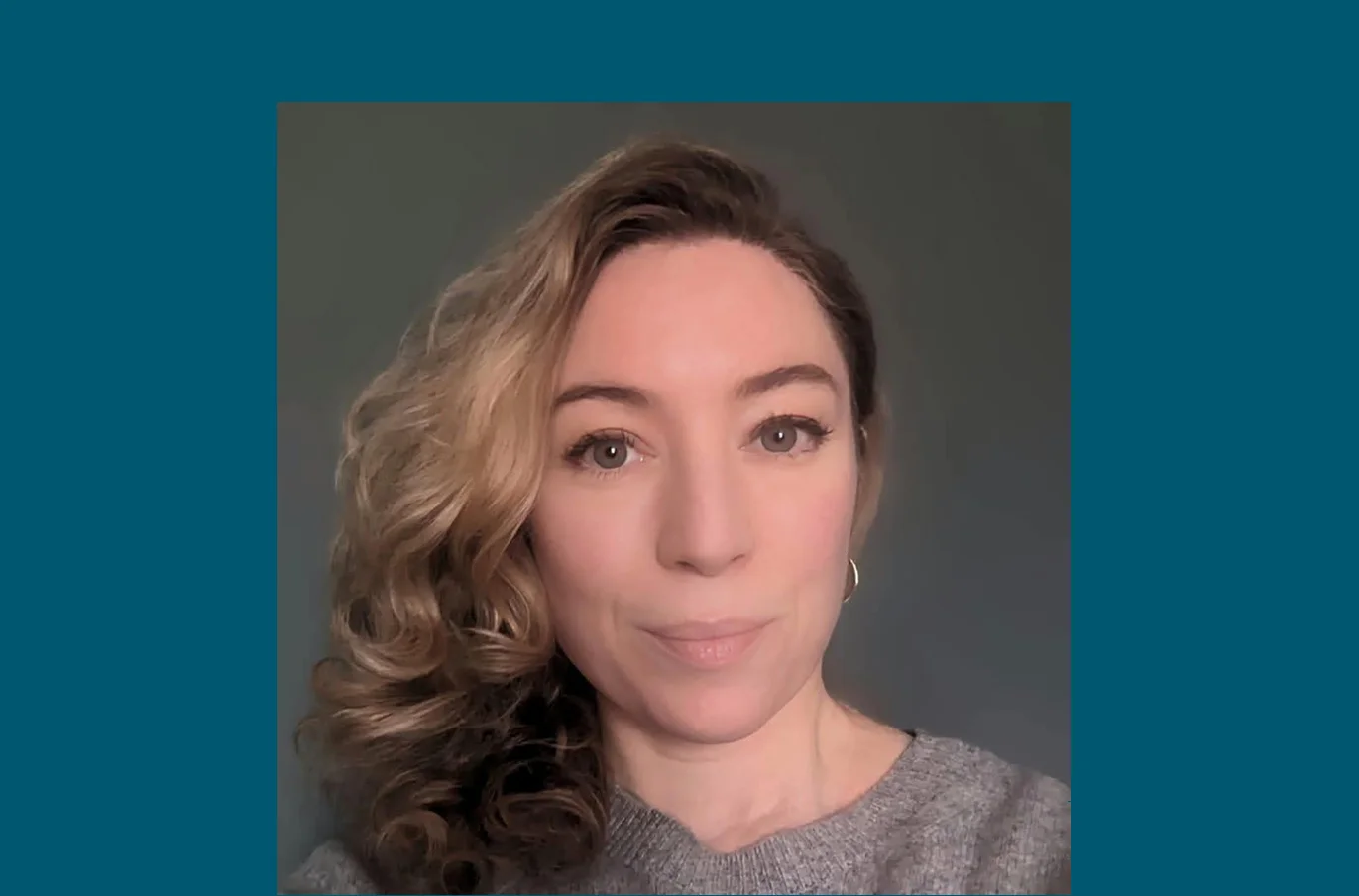
That question ran through every exchange in the second session of Advance HE’s ‘Executives at the Leading Edge’ programme, held on 16 April 2026 and chaired by Dr Órlá Flynn, President of Atlantic Technological University (ATU).
Dr Flynn opened by reflecting on her own experience leading ATU, a university formed from the merger of three institutes of technology, spread across nine campuses in one of Ireland’s most economically transitional regions. Her guiding task, she explained, had been less about project management and more about belonging: “making everybody feel that they are at the heart of what’s going on, regardless of whether they were on one of the larger campuses or one of the very small campuses.” The session, she noted, took place against a backdrop of unprecedented disruption globally: financial pressures, geopolitical instability, the erosion of EDI commitments in some contexts, and technological change that is reshaping every aspect of institutional life.
Inclusive leadership in troubled times
The first provocation came from Professor Steve Olivier, Principal Vice-Chancellor at Robert Gordon University in Scotland. Drawing on the African philosophical concept of Ubuntu – “I am because we are” – he argued that inclusive leadership is not a fair-weather practice; it is, if anything, more necessary when the stakes are highest.
RGU identified serious financial challenges early and acted decisively, undertaking a Finance Transformation Project that involved significant structural redesign, workforce change, and cost reduction, a process Professor Olivier described as “pretty tough” and “deeply human.” Throughout, the principles underpinning the approach were trust, respect, transparency and participation. He held regular all-staff town halls, individual school-level meetings, and open drop-in sessions – unaccompanied, he was clear – because genuine accessibility requires the absence of intermediaries. A subsequent staff survey showed a meaningful decline in commitment to the university. Rather than minimise this, he published the results and acted on them.
His reflections were candid. Six months in, he realised that relentless transparency about difficulties had tipped into something else: “I was just being a prophet of doom and gloom.” Confidence, as much as honesty, is a form of care for an institution’s people. He also acknowledged that some structural changes would have been better made during more stable times, a lesson, he suggested, for leaders across the sector. His conclusion was unambiguous: “Inclusive leadership is even more necessary in troubled times. Participation must be meaningful, not just symbolic.”
The hidden architecture of exclusion
Professor Shaun Ewen, Deputy Vice-Chancellor at Griffith University in Australia and one of only three First Nations academics in a mainstream executive role in the country, offered a structural analysis with global resonance. His provocation – that universities are structurally excellent at reproducing inequality, even while talking about equity – used the framework of the formal, informal and hidden curriculum to expose the gap between institutional intent and institutional impact.
The formal curriculum is what institutions claim to value: policies, strategies and governance documents. The informal curriculum is how decisions are actually made: who speaks, whose concerns are deferred, who gets to have a conversation with those in power. The hidden curriculum is what people learn about belonging, “whose excellence is conditional, whose burden is normalised.” Indigenous leadership, he argued, operates as a mechanism of institutional accountability precisely because it names these dynamics and insists they are executive responsibilities, not interpersonal ones.
Inclusion as disruption
The third provocation, from Professor Kendi Guantai, Dean for Culture and Inclusion at Lancaster University, challenged the room most directly. Inclusion on its own, she argued, is insufficient. It leaves power exactly where it was. The includer retains control; the centre remains the centre. Real transformation requires the deliberate redistribution of power – and that is uncomfortable by design.
She drew on her experience creating Africa Week at the University of Leeds: an initiative in which African scholars, practitioners and students were not invited into a pre-designed framework, but were its architects. Senior leaders were asked to enter spaces they did not control, to listen rather than steer. “Belonging means the institution itself shifts,” she said. The initiative generated new international partnerships, cross-faculty conversations, and moments of genuine intellectual dignity for African and Afro-diasporic staff and students, but it also made visible the disproportionate emotional and intellectual labour that falls on minoritised colleagues when equity work is undertaken. “Institutions are patterned to draw disproportionately on minoritised bodies when equity work needs to be done. That is not an accident.”
What participants took away
Breakout discussions reinforced and deepened the provocations. Participants reflected on the risk of inclusion becoming a bureaucratic exercise – one diligent person completing an equality impact assessment, rather than a genuine consultation. On the tension between crisis management and transformative thinking: command-and-control structures, understandable under pressure, are the opposite of inclusive leadership. On the burden of equity work, and the importance of shared responsibility rather than delegation to those most affected. And on cynicism – the persistent suspicion, in organisations under stress, that consultation is performance. The only known antidote, participants agreed, is the kind of sustained, visible, consistent transparency that Professor Olivier had described.
Dr Flynn drew the threads together with characteristic precision. Ubuntu, she noted, had woven through all three provocations: the conviction that institutions, like people, flourish or diminish together. Real inclusion, all three speakers had argued in different ways, is not about smoothing difference. It is about the intentional unsettling of hierarchy, and that begins, always, with what leaders are willing to relinquish.
Executives at the Leading Edge
Available to Advance HE members only, ‘Executives at the Leading Edge’ is designed exclusively for senior leaders who shape the strategic direction of higher education institutions worldwide. Each session is developed in partnership with university executives to ensure relevance to institutional priorities.
The next session in the series is Navigating a Political Context, 8 May 2026, 08:00-10:00 BST
Find out more about upcoming sessions
Read the write-up: Leading institutions as resilient systems: reflections from the first ‘Executives at the Leading Edge’ session